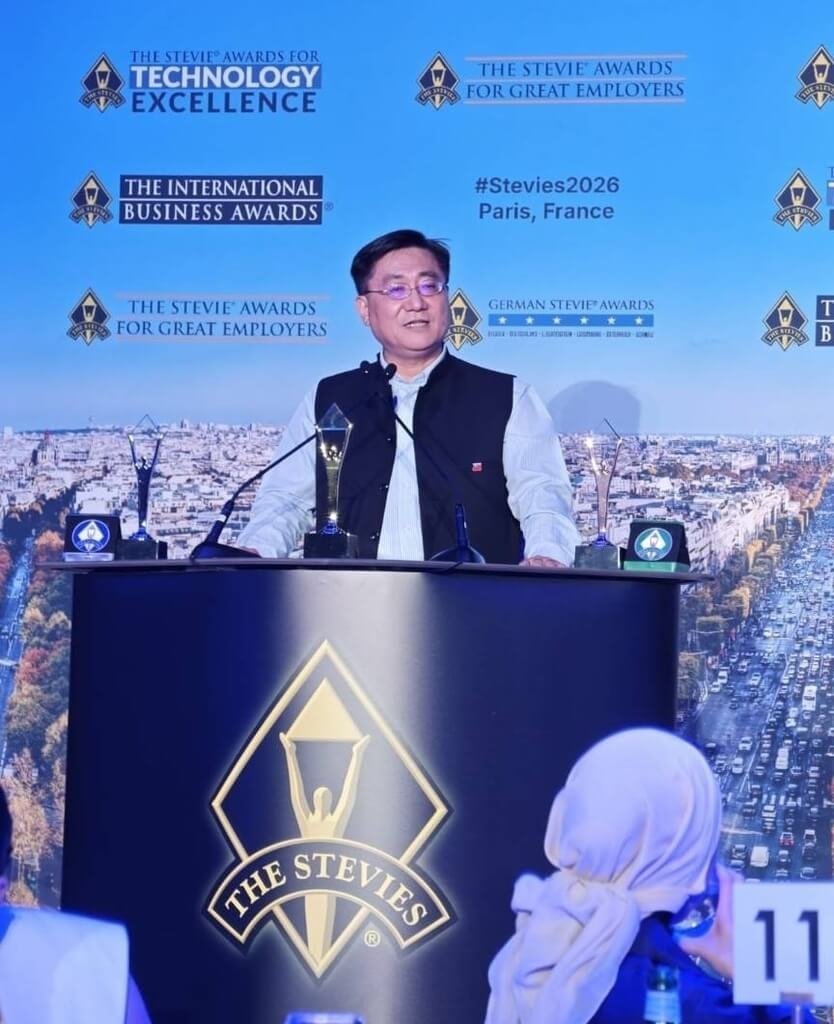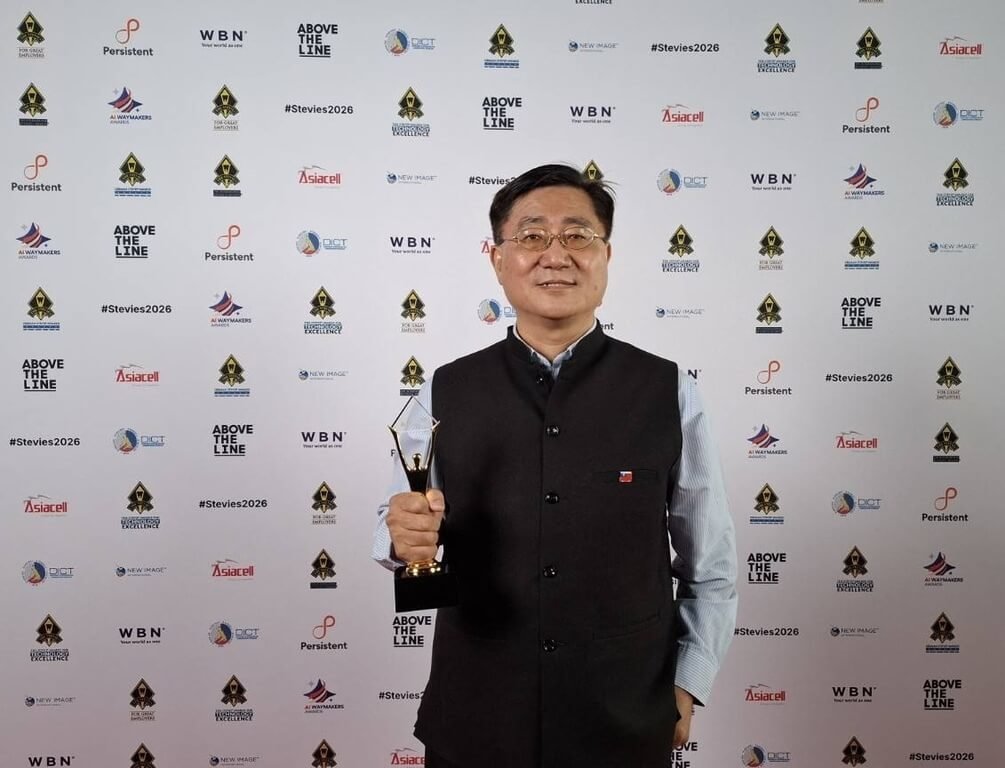
CT Wang, a distinguished professor in the Department of Mechanical and Mechatronics Engineering at National Ilan University, received the Stevie Awards Gold Medal for Technology Excellence in Paris for his research on "AI-Driven Digital Twin and Bioelectrochemical Innovations Applied to Sustainable Wastewater Energy Conversion Systems," which integrates interdisciplinary technologies.
Wang, former head of the Science and Technology Division at the Taipei Economic and Cultural Office in India, received the Gold Medal in the Green and Clean Technology category of the Stevie Awards for Technology Excellence, specifically the "Sustainability and Energy-Saving Computing Excellence Award," for developing a wastewater energy conversion technology combining artificial intelligence (AI), digital twins, and bioelectrochemistry. He accepted the award today in Paris.
He stated that this technology, centered on a microbial fuel cell, combines AI prediction, real-time sensing, digital twins, and heat flow analysis. The system not only treats wastewater and removes pollutants but also recovers electricity by utilizing the energy generated when microorganisms decompose organic matter.
In a telephone interview with the Central News Agency, Wang Jin-can said that receiving the Stevie Award represents recognition of his research integrating interdisciplinary and cutting-edge technologies. His laboratory comprises researchers with diverse academic backgrounds, covering biology, environmental engineering, materials science, chemistry, and electrical engineering. His own expertise lies in aerospace engineering, and he hopes to apply his research findings to the space field in the future.
He stated that future technological trends require the integration of different individual technologies into systems to maximize system benefits and achieve substantial empowerment. Digital technology and AI can reintegrate existing capabilities. "The development of AI does not make existing technologies disappear, but rather allows many technologies to be reintegrated (across disciplines)."
Wang Jin-can said that his research team uses AI to analyze the relationship between water quality, flow rate, voltage, and operating conditions to predict energy output, pollutant removal efficiency, and system performance changes. They also use digital twin technology to simulate actual systems, helping to improve operational efficiency and stability.
He hopes that these technologies will be applied to decentralized wastewater treatment, smart factories, recycling, and energy systems in remote areas in the future.
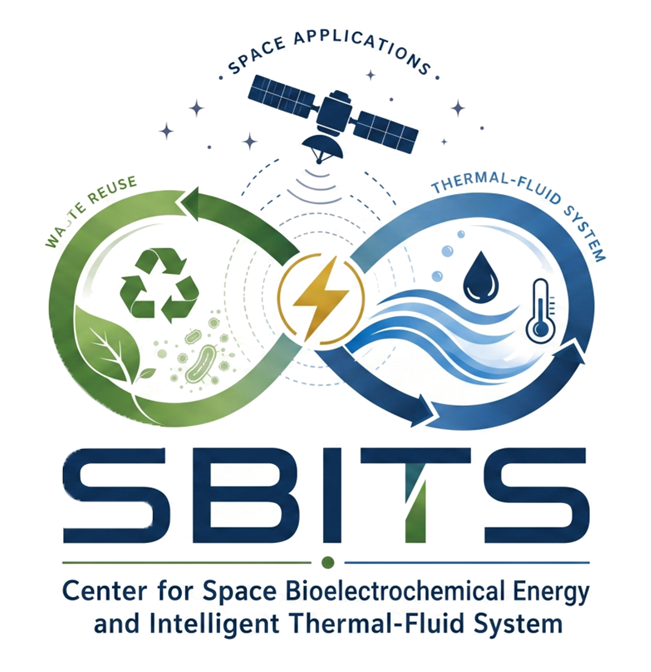
Wang Jin-can has long been dedicated to research in microbial fuel cells, hydrogen energy, thermal science, and sustainable energy. In recent years, his research has extended to bioenergy conversion under simulated microgravity environments and resource recycling technologies required for future life support systems in space, gradually developing an interdisciplinary research direction of "space bioelectrochemical energy and intelligent thermal systems."
He stated that the research team will continue to deepen its research in AI digital twins, bioelectrochemical energy conversion, and space sustainable technology, expanding collaborations with teams in India, Japan, Thailand, and Australia. They hope to gradually apply laboratory results to real-world applications, providing new technological options for Taiwan's green energy technology and international sustainable development.
The Stevie Award for Excellence in Technology is a global business and technology award that recognizes individuals and teams demonstrating outstanding innovation in artificial intelligence, information technology, green technology, and biotechnology. (Edited by Tang Sheng-yang) 1151029
[News] CT-Wang research on AI-assisted wastewater energy conversion receives Gold Medal for Scientific Excellence in Paris.